On this page
“Show me the training records” is the moment a compliance framework is either real or not. Hong Kong regulators and professional bodies each keep their own rules on what has to be recorded and for how long, but they converge on one test: for any named person, can you produce a complete record, with evidence, without reconstructing anything? This guide defines what audit-ready means, lists the fields worth capturing, and gives a checklist you can run before anyone asks.
Sources checked on 25 October 2026 against the guidelines listed at the end. This is general information, not legal advice; confirm retention and evidence rules with your own regulator.
What regulators actually require
AML/CFT: the most explicit rule
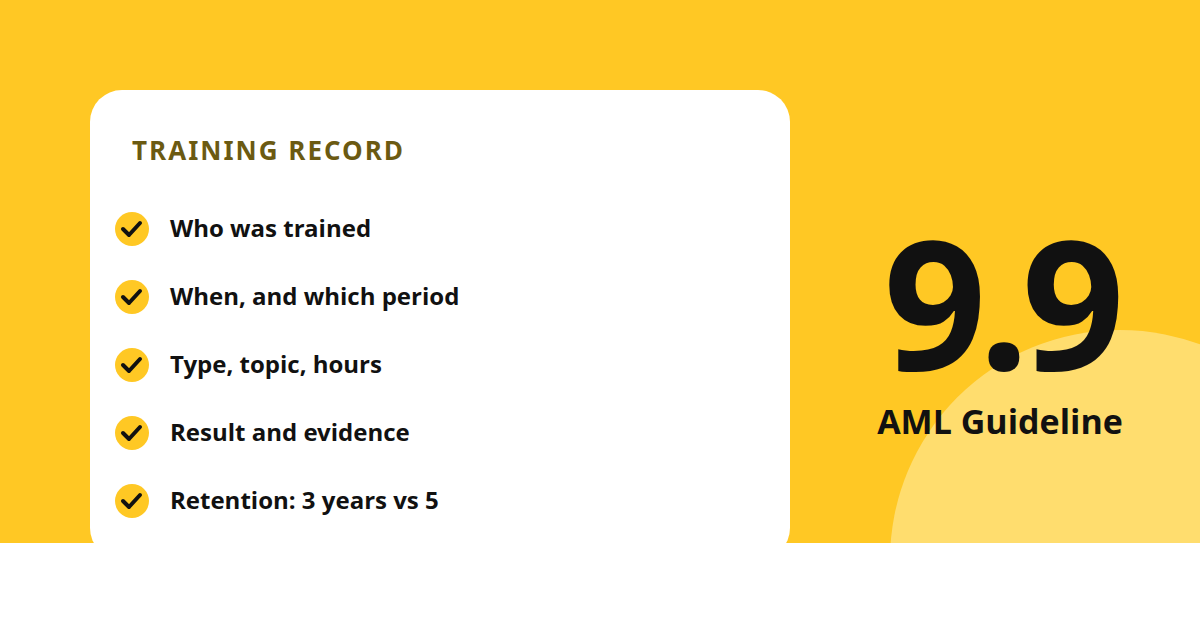
The Guideline on Anti-Money Laundering and Counter-Financing of Terrorism, issued under the AMLO for authorized institutions (with parallel guidelines for other sectors), devotes a chapter to staff training. Paragraph 9.9 requires training records to be kept for at least 3 years, and specifies that these records show who received the training, when the training took place, and the type of training given. The same chapter expects different training for different staff groups: all new staff, staff dealing directly with the public, back-office staff, managerial staff including internal audit and compliance officers, and the money laundering reporting officer.
CPD and CPT regimes: hours with evidence behind them
The CPD regimes are about hours, but the record-keeping expectations are similar in structure:
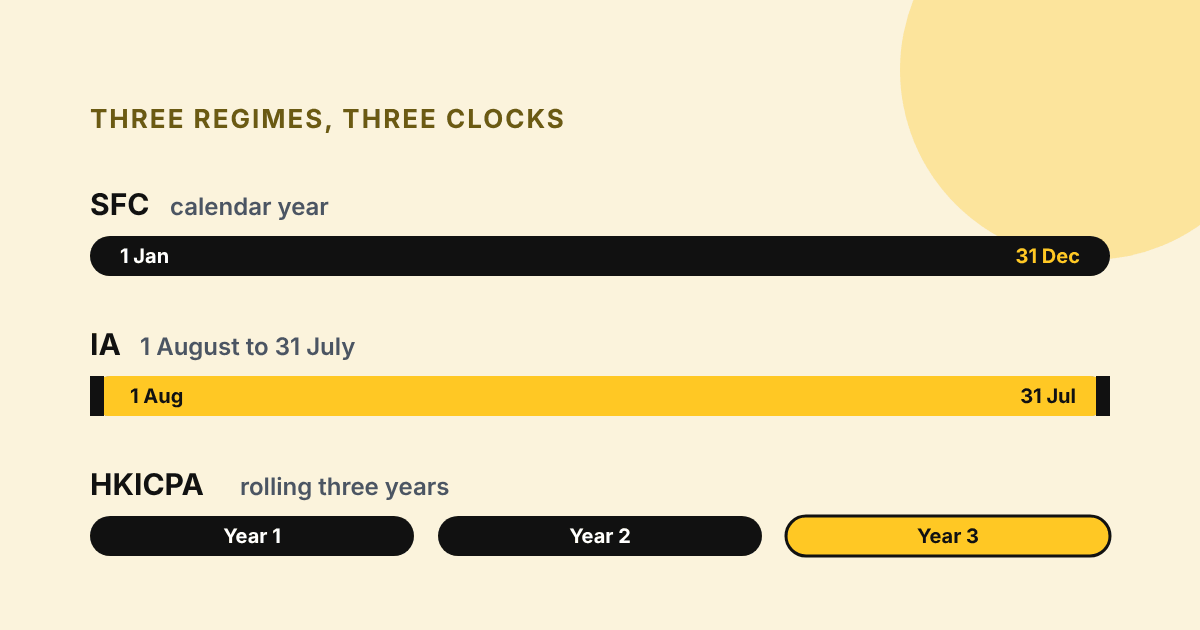
| Regime | What must be evidenced | Retention |
|---|---|---|
| SFC CPT | Documentary evidence of continuous professional training, such as attendance certificates or exam results | At least 3 years |
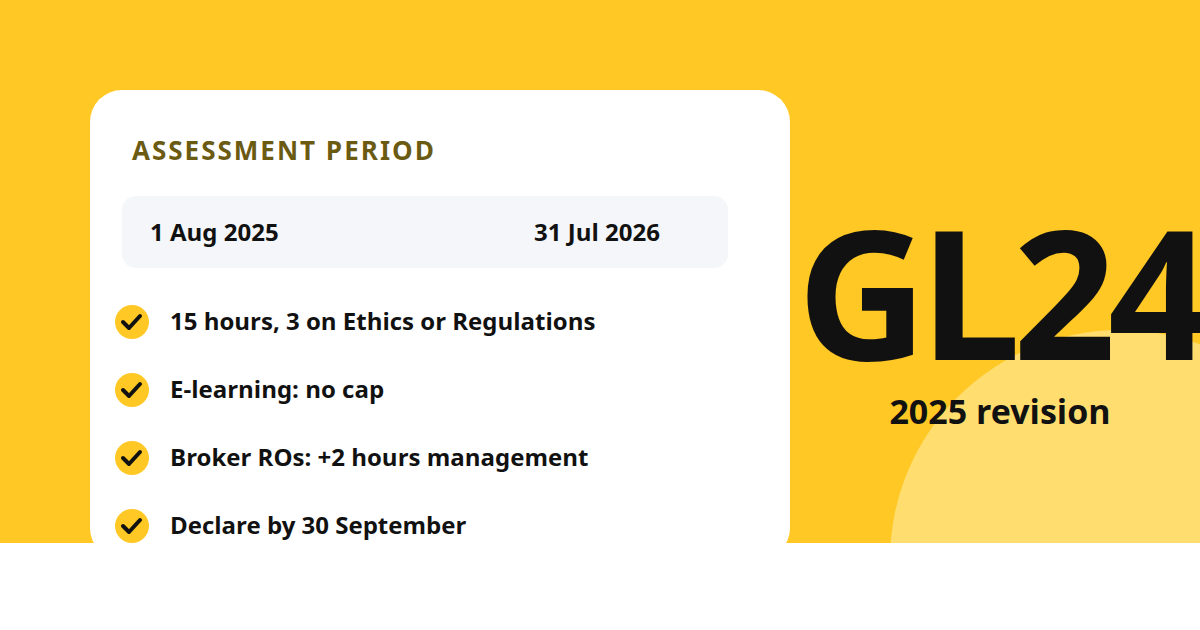
| IA CPD (GL24) | Evidence of Qualified CPD Activities; principals must request, check and verify the evidence | At least 3 years after the end of the Assessment Period |
| HKICPA CPD | Evidence of verifiable hours, confirmable by a competent source | At least 5 years |
For the hour requirements behind these regimes, see CPD requirements in Hong Kong compared, and for the insurance regime in detail, what the 2025 GL24 revision changes.
The fields an audit-ready record should carry
Regulators name only a few fields, but producing them reliably in practice means capturing more:
- Who: learner identity, role, and which regime or rule set applies to them (not just their name).
- What: course title, version, and the topic category it counts towards, such as ethics or regulations.
- When: completion date, and the reporting period it falls into.
- How long: credited hours, and how they were calculated.
- Result: assessment score or attendance confirmation, where the activity has one.
- Evidence: the certificate, attendance record or system log, attached to the record rather than stored elsewhere.
- Status: whether the activity met the approval conditions for its type, where the regime distinguishes types.
- Retention: the rule that sets how long this record must be kept, so deletion is a decision and not an accident.
Where audits usually fail
- The record exists but the evidence does not. A spreadsheet says someone attended; nobody can produce the certificate.
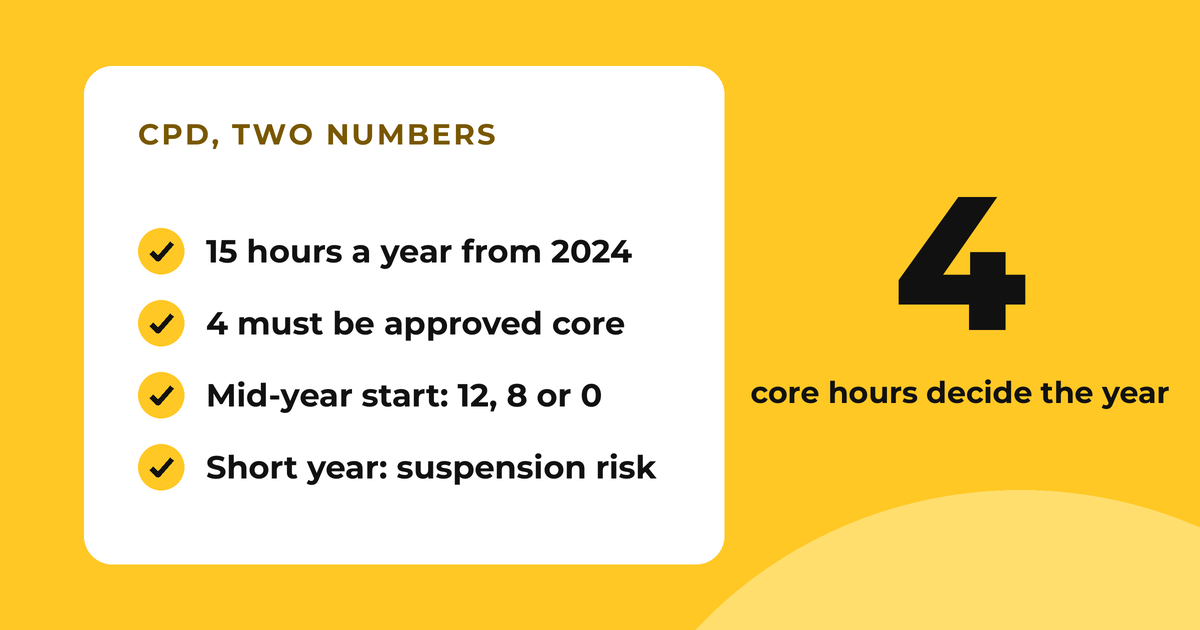
- Hours are not tagged by topic. A total of 15 hours means nothing if 3 of them had to be ethics and nobody marked which ones they were.
- The period boundary was missed. Training completed on 2 August counts in the new Assessment Period, not the one that ended on 31 July.
- Leavers and joiners fall through. A person who changed employers mid-year, or left before the audit, still has to be in the record.
- Two regimes, one spreadsheet. The same person tracked against HKICPA rules on one tab and SFC rules on another, with different period logic, reconciled by hand.
A pre-audit checklist
- Pick five people at random, across regimes if you have several. Produce the complete record for each in under an hour.
- For each record, open the underlying evidence. If any line cannot be traced to a certificate or system log, that is the gap to fix first.
- Check that topic minimums can be counted separately from total hours for every person.
- Confirm retention is at least as long as the longest applicable regime: 5 years if you have HKICPA members.
- Confirm leavers are still in the record for their full retention period.
- Rehearse the firm-wide version: one export, every person, one period.
Where a system helps
Everything above is a data model problem: people, rules, activities, evidence and periods, joined correctly. An LMS with a CPD engine keeps the join permanent instead of re-creating it every September: hours are credited at completion with the topic tag attached, the certificate is stored with the transcript, and the retention rule is a property of the record. That is what UpLearn with the Cyberwisdom CPD Engine is designed to do. Cyberwisdom is a Hong Kong provider of learning management systems, CPD compliance software and bespoke courseware, serving 800+ enterprise clients since 1999.
Sources
- HKMA: Guideline on Anti-Money Laundering and Counter-Financing of Terrorism (for Authorized Institutions)
- SFC: Guidelines on Continuous Professional Training
- Insurance Authority: Guideline on Continuing Professional Development for Licensed Insurance Intermediaries (GL24)
- HKICPA: CPD requirements (FAQ)
Cyberwisdom Asia Ltd. is a Hong Kong provider of learning management systems, CPD compliance software and bespoke courseware, serving 800+ enterprise clients since 1999.
About Cyberwisdom